Up to 6 Years in Prison: Zelenskyy Signs Anti-Drop Law
November 17, 2026
President of Ukraine Volodymyr Zelenskyy has signed Law No. 5038-IX, adopted on the basis of Draft Law No. 16013, which introduces criminal liability for participating in money mule (drop) schemes. From now on, individuals who knowingly hand over their bank cards, payment details, or account access to third parties for conducting illegal financial transactions face a fine or even a real prison sentence.
The maximum penalty for certain violations is up to 6 years of imprisonment.
The new rules cover various roles in drop schemes: from account holders who agree to receive and transfer someone else's funds to individuals who collect bank cards and pass them on to the organizers of financial fraud. The law entered into force on November 15, 2026.
How Drop Schemes Work
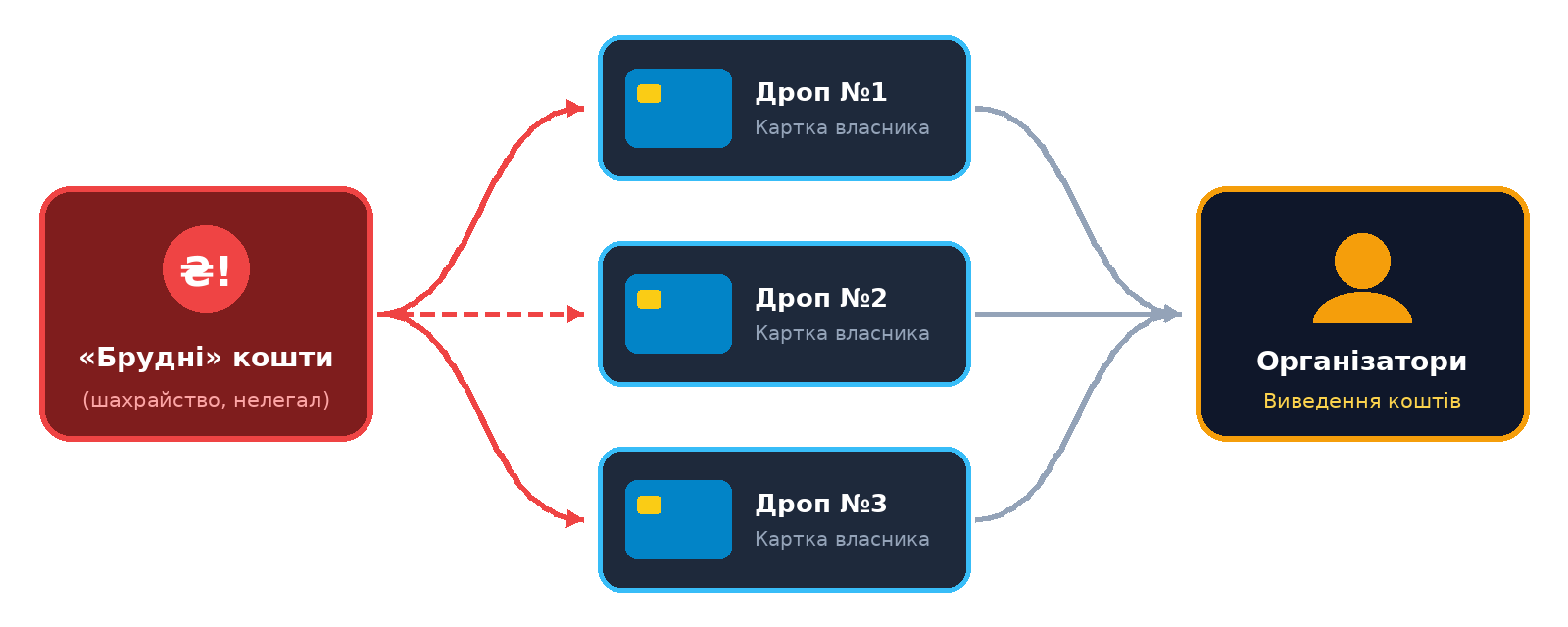
"Drops" (money mules) are individuals who, in exchange for a reward, provide third parties with their bank cards, accounts, or access to online banking to conduct financial transactions. Money obtained through fraud, illegal sales of goods, or other criminal offenses can pass through such accounts.
Scheme organizers typically recruit potential participants via social networks, messengers, and ads promising quick earnings. A fixed reward is offered for opening an account, handing over a card, or receiving transfers, after which these financial instruments are used to move funds between different accounts.
In such a scheme, the cardholder helps conceal the true recipients of the money and complicates tracing its origin. Even if a person is not directly involved in fraud, knowingly handing over an account for illegal operations can serve as grounds for criminal liability.
What Penalties the Law Provides
The new law supplements the Criminal Code of Ukraine with provisions on liability for illegal operations involving payment instruments and access to bank accounts. The specific punishment depends on the nature of the actions, repeat offenses, and participation in an organized group.
The prescribed sanctions include:
- Handing over one's own bank card or account access for illegal transactions conducted by other persons – a fine of UAH 5,100 to UAH 17,000.
- Obtaining, acquiring, storing, or transferring someone else's cards for fraudulent purposes – a fine of UAH 51,000 to UAH 85,000, restriction of liberty for up to 3 years, or imprisonment for 2 to 4 years.
- A repeat offense or participation in an organized group – a fine of UAH 85,000 to UAH 170,000, or imprisonment for 4 to 6 years.
Thus, the maximum prison term is reserved for more serious cases, particularly repeat offenses and participation in organized groups. For a first-time transfer of one's own card with the corresponding criminal intent, the law stipulates a fine.
Is It Possible to Avoid Punishment?
For individuals who have committed an offense under the first part of the new article for the first time, the law provides the possibility of exemption from criminal liability if certain conditions are met.
To take advantage of this option, a person must voluntarily notify law enforcement agencies about the transfer of the payment instrument or account access, as well as actively assist in uncovering and stopping the crime committed by other persons. This must be done before being served a notice of suspicion.
This provision allows people who find themselves in such a situation for the first time to cooperate with the investigation, though it does not mean automatic exemption from liability for all participants in financial schemes.
What Will Change for Cardholders
Following the entry into force of the law, handing over a bank card or account access for illegal operations will carry clearer criminal-law consequences. Therefore, offers to make money by opening an account, receiving transfers, or giving a card to a stranger may pose a serious risk to the owner of the financial instrument.
At the same time, the law does not establish criminal liability for just any transfer of a card to another person. The decisive factor is the purpose of using the payment instrument—specifically, handing it over for fraud or another criminal offense.
Conclusion
Tightening liability for drop schemes may complicate the operations of financial fraudsters who use the accounts of ordinary citizens to receive and cash out illegally obtained funds.
For banking service users, this means a need to scrutinize quick-money offers more carefully, especially if a condition of cooperation is handing over a card, payment details, or access to online banking. The reward for such actions may turn out to be far smaller than the financial and legal consequences of participating in a criminal scheme.