Black List Kursoff: how to stop losing money on recurring risks
May 05, 2026
In the cryptocurrency exchange niche, speed is both an advantage and the main vulnerability. When requests come in one after another, it is easy to miss a red flag. Without access to an incident database, exchangers see only their own history, and fraudsters take advantage of this by moving from service to service.
Black List Kursoff – is your collective immunity. A centralized database where exchangers record fraudsters, mistaken overpayments and debtors, so others do not make the same mistakes.
One tool, three levels of protection
Black List integrates into the team’s workflow so that everyone sees their own risk profile:
- For the operator: it is an instant stop signal. There is no need to remember anything or search through notebooks – the system will highlight the risk at the moment the request is created.*
- For the AML specialist it is additional context. Blockchain analytics will not show that a client “forgot” to return an overpayment to another exchanger a week ago, but Black List will.
- For the owner: it is real savings. You minimize losses from human error and systematic fraud.
* Currently, automatic Black List integration works with the Lara script. If the exchanger works on Lara, information from the database is automatically pulled into the workflow: the system can show a match exactly at the moment the request is created, when the operator can still stop the operation or send it for additional verification.
If the service works on another script, the check needs to be done manually through the personal account on the Kursoff website: before confirming the request or during a disputed case.
How does it work in practice? Instead of solving the problem after the money has already left the cash desk (reactive model), you stop the transaction before it even leaves the shore (proactive model). Match in the database — pause – verification.
Why is local monitoring no longer enough?
Malicious actors are not stupid. If their scheme did not work in one place, they go where no one knows anything about them. Black List Kursoff stops these tours:
- Shared security: The experience of market colleagues becomes your free protection.
- Detection of repeat cases: The system highlights those who systematically “make mistakes” in their own favor.
- B2B verification: The database contains data not only about clients, but also about problematic partners or conflict exchangers.
How it looks in operation
Black List has already helped exchangers in real situations: there were cases when a record in the database made it possible to see the risk in time, stop the request and avoid losing funds. The value of the tool is not only in individual stories. The main thing is how it works every day when the team processes requests and has to make decisions quickly.
So let’s show a bit of the functionality:
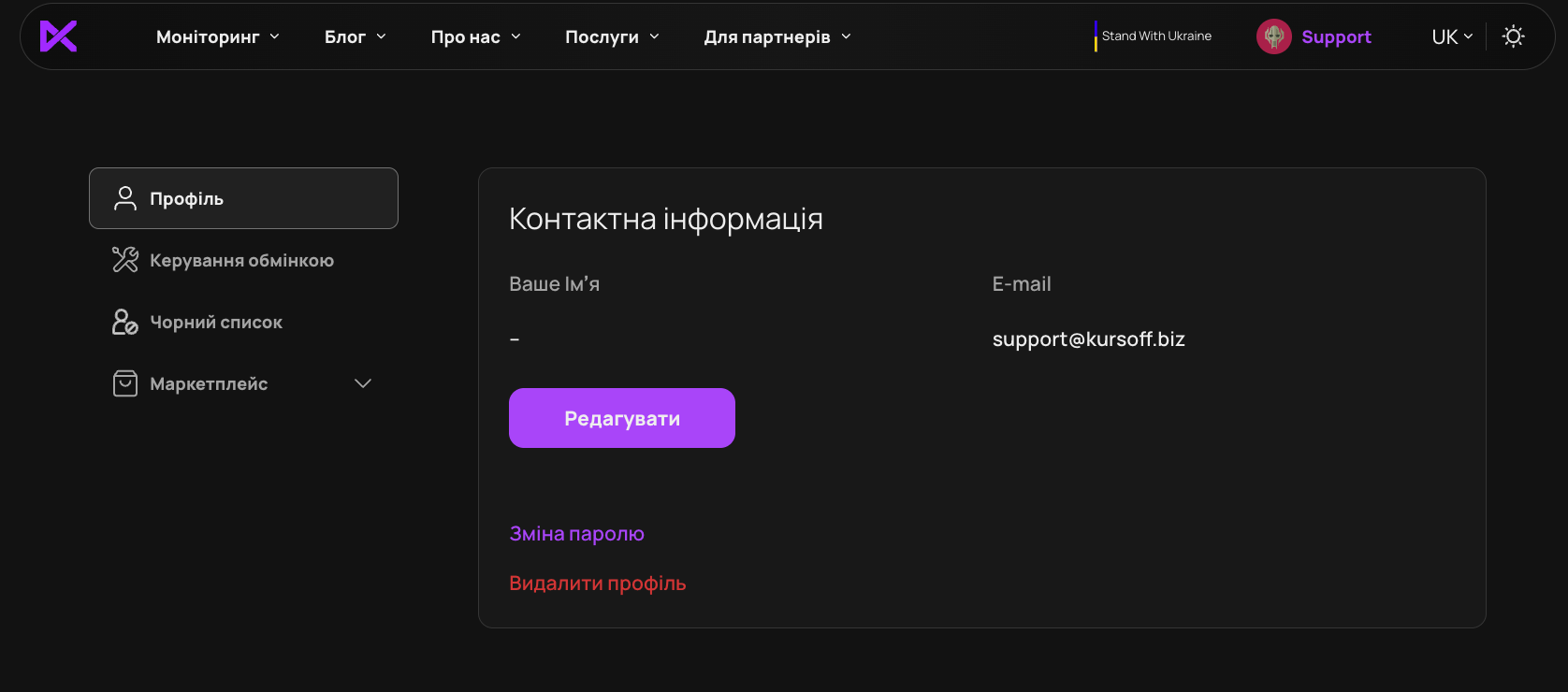
Black List personal account: in the account, you can view records on users, partners and exchangers, see case details and the status of the situation. This way, the team quickly understands who it is dealing with: a new client or a person, partner or service that already had a problematic history.
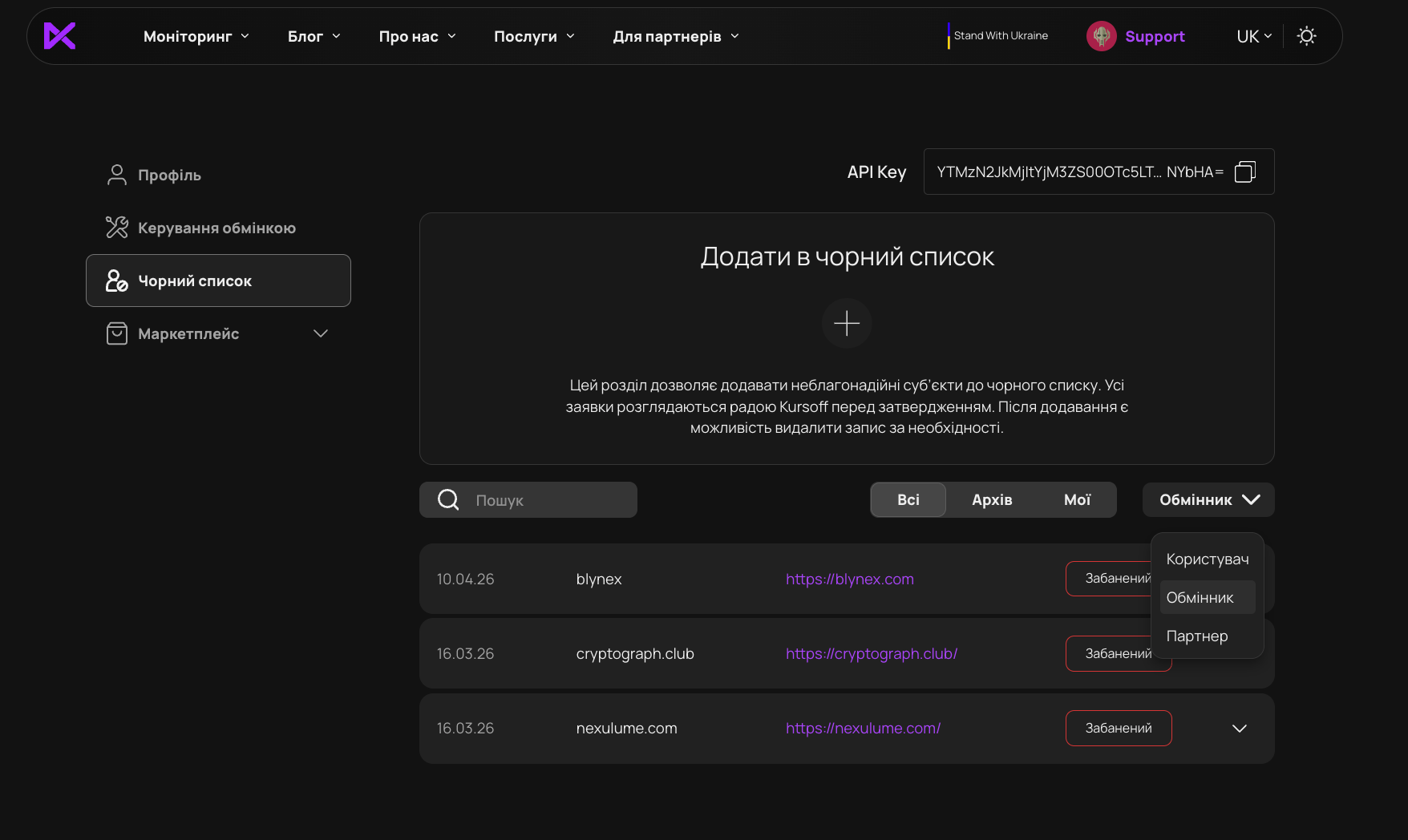
Categories and records in the database: Black List is divided into separate blocks so the team does not search through one single list. Users, partners, exchangers and resolved cases in the archive can be checked separately. This structure saves time and reduces the risk of missing important information.
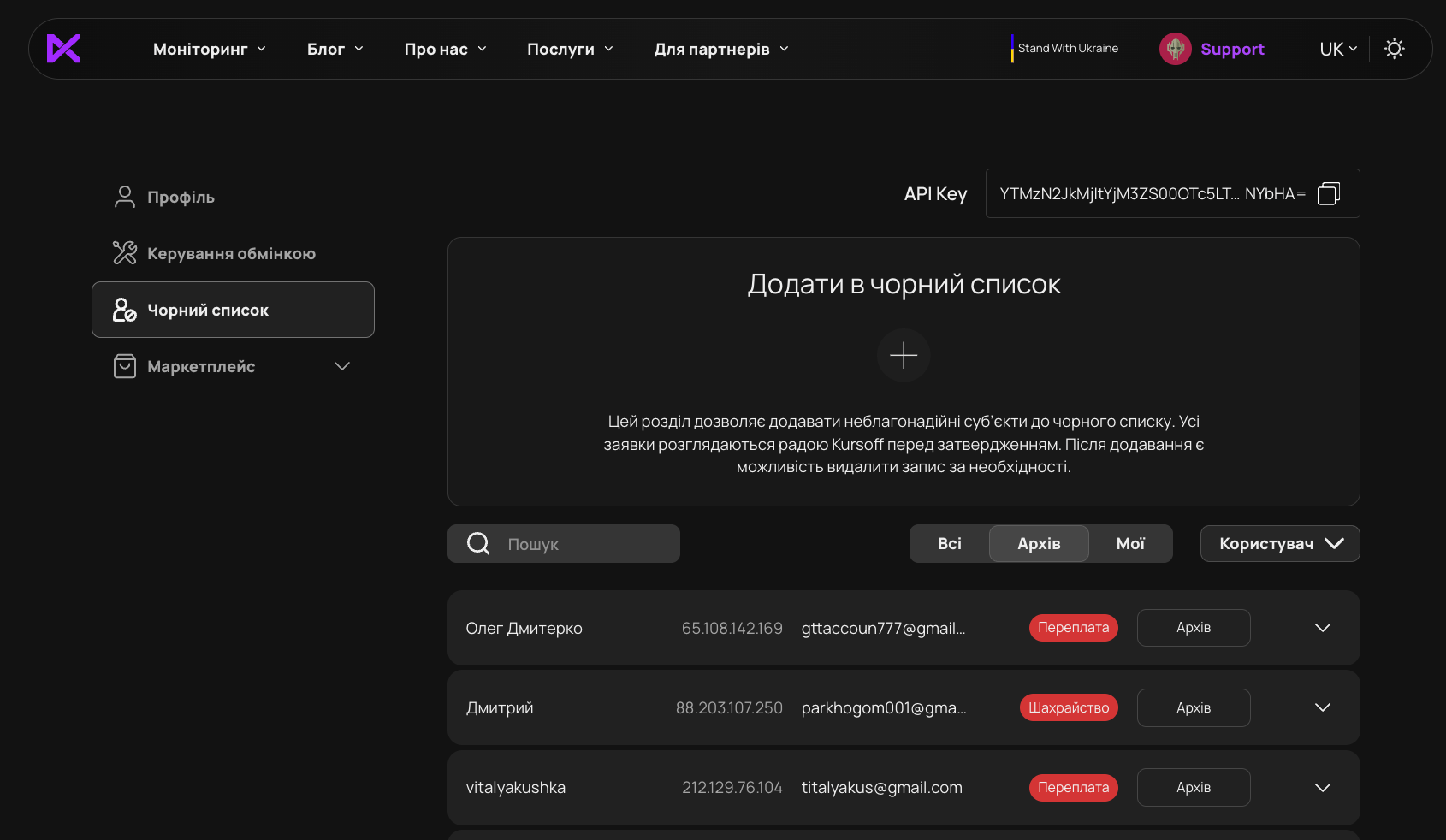
Archive of resolved cases: the archive is needed for situations that have already been resolved. If a debt was returned, an overpayment was closed or a conflict was resolved, this can be recorded separately. This way, the team sees not only the fact of the problem, but also how it ended.
If the exchanger works on Lara, Black List can automatically pull information into the workflow. If the service works on another script, the check needs to be done manually through the account: before confirming the request, during a disputed situation or when the client raises additional questions.
A structure where everything is organized
So the team does not waste time on chaotic information searches, we divided the database into three categories:
- Users: individuals with a problematic history: overpayments, debts, chargebacks or other conflict cases.
- Partners and exchangers: risks in the B2B segment. Here, situations related to interaction between services, partners or other market participants can be recorded.
- Archive: a separate section for resolved cases.
Why is the archive needed? The archive is important for a fair approach. If a person returned a debt or resolved a conflict, this should be recorded. Reputation can be restored, but the history remains in the system so the team understands the context of previous interaction.
How to start using it?
Today, Black List is already integrated with the Lara script. If your exchanger already works on Lara, warnings appear directly in your work panel. We are also working on integration with other scripts so that Black List becomes available to more exchangers and helps form a shared security contour for the entire market.
The conclusion is simple: Black List Kursoff is a working tool that makes fraudulent schemes more complicated and less profitable. Even one record about a small violation can tomorrow save another exchanger thousands of dollars, and a record added by another service may one day protect your team.