
CryptoBee Exchange: how the service helps move funds through Wise, Revolut, Zelle, and PayPal
April 20, 2026
Not so long ago, CryptoBee Exchange was for many people primarily a service through which you could clearly and without unnecessary noise exchange cryptocurrency for cash or vice versa. Offices in California, fixed terms, a clear process, and fast communication: this is exactly what the team built its reputation on.
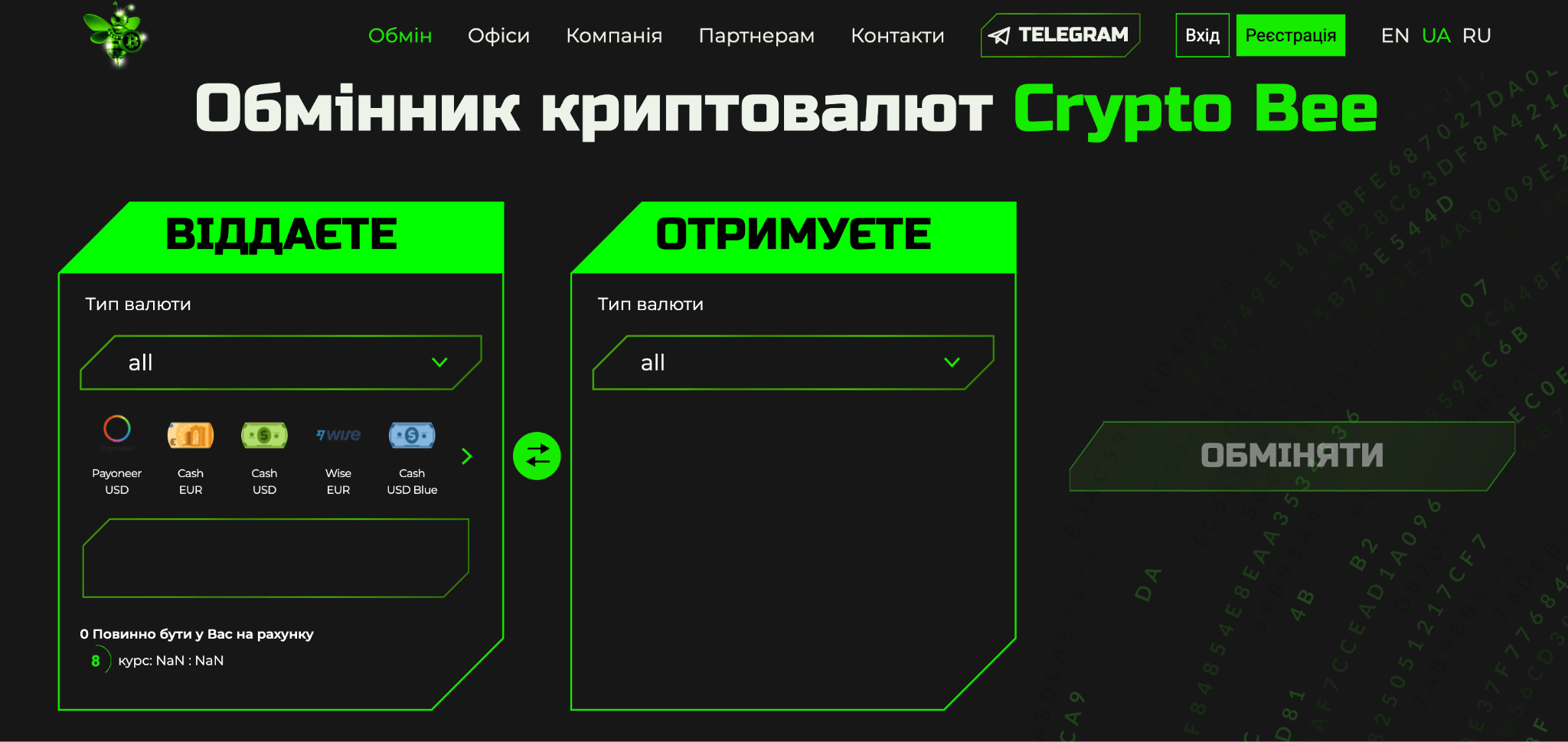
Recently, client requests have changed noticeably: now clients come not only for classic exchange operations. More and more often, they need to solve a request related to payment systems: move funds through Wise, receive cash after a transfer to PayPal, send money through Revolut, withdraw a payout from Payoneer, or build a working route between several instruments at once.
For the market, this is a normal stage: money is increasingly moving not in a straight line, but through several platforms, countries, and formats. In such a situation, not only the exchange rate becomes important, but also whether this path can be completed safely and predictably at all. That is why CryptoBee Exchange today places a strong focus on the payment systems direction and is gradually turning it into one of its key specializations.
From classic exchange to complex financial routes
In the first conversation with CryptoBee Exchange , a lot of attention was paid to the basics: transparency, support, fixed terms, and the ability to guide the client through the deal. These principles have remained unchanged, but the structure of requests itself has become different over time.
Before, everything was simpler: crypto to cash or cash to crypto. Now clients more often come not for a separate exchange operation, but with a specific request – to move funds through Wise, Revolut, PayPal, or another system and get the needed result in a convenient format. Because of this, the service works not only as an exchanger anymore, but also as a point where the entire route of the operation is built.
Wise Revolut PayPal Payoneer
\ | | /
CryptoBee Exchange
/ | \
Cash USDT Bank account
Why payment systems have become one of the main directions
According to the CryptoBee Exchange team, the payment systems direction has naturally grown stronger: the market had long needed such solutions, but there was a lack of convenient tools for non-standard tasks.
A classic bank transfer works slowly, expensively, or with limitations for many people. Cryptocurrency still seems too complicated for some users when the topic is not trading, but everyday financial tasks. Payment systems themselves are not universal either. In some cases there are limits, in others it is difficult to work with certain countries, and in others there is not enough flexibility to cash out or continue converting funds.
That is why clients increasingly need not a separate service, but a working route between several systems. In simple terms, not just to send money, but to go from one financial point to another in a way that works without delays, blocks, and unpleasant surprises along the way. CryptoBee Exchange has started building this direction systematically.
How client behavior has changed
According to the team, the user has started formulating requests much more precisely. If раньше a person came with a basic exchange scenario, now they more often describe an entire task. For example, they have a payout to Payoneer, and they need to turn these funds into cash or cryptocurrency. Or the money is already in Wise, but the final receiving point is not a bank account, but physical cash delivery in another country.
Such cases require a different level of work. Here, it is no longer enough just to accept an application; it is important to understand the context: which system is being used, which country the client is in, what output format they need, what amount is being moved, and where risks may arise. It is at this level that the real difference between a standard exchange and deep work with payment systems begins.
What matters most to the client today
In this field, many people are used to thinking that the exchange rate always comes first. But practice shows otherwise. At CryptoBee Exchange, they say that reliability has become the main factor for most clients. It is important for a person to understand that the deal will go exactly as agreed, without changes to the terms during the process and without surprises at a critical moment.
Speed also matters a lot, especially when large amounts are involved or when money needs to be moved without waiting for hours. The exchange rate, of course, remains important, but many users already understand a simple thing: if a service provides predictability, support, and a well-organized process, a small difference in terms does not look decisive.
Another factor is the convenience of the payment system itself. But here everything depends heavily on a person’s habits. Some have long worked with Wise, some live inside Revolut, and some do not want to dive into the details at all and expect only one thing: that the money reaches the needed point properly.
What problems users most often face
Working with payment systems is rarely completely straightforward. One of the most common problems is delayed or frozen payments. A system may stop a transaction without a clear explanation, especially if the operation appears atypical or risky to its algorithms.
Then come limits. Many users encounter them only after part of the route has already been completed, and then a restriction by amount or operation type appears. Hidden fees, non-obvious exchange losses, and simply choosing the wrong tool are also worth mentioning. A person often uses the system they simply know, although for their task a completely different route would have been more logical.
At CryptoBee Exchange, they believe the result depends almost equally on the payment system itself and on how the service organizes the process. A properly prepared request, a clear route, timely confirmation, and the ability to take into account the specifics of a particular platform noticeably reduce the risk of a freeze or a block.
Which payment systems are currently in focus
Among CryptoBee Exchange clients, the most commonly used are Wise, Revolut, Zelle, PayPal, Skrill, Payoneer, and Paysera. Each of these systems covers its own type of task, and that is exactly why the team does not see them as interchangeable tools.
Wise remains one of the most convenient options for international transfers with transparent terms and clear conversion. For many clients, it becomes the entry point after which funds are moved further – into cash, crypto, or another settlement format.
Revolut is more often chosen by those who live or work between several countries and want a convenient tool for everyday spending, conversion, and card use within one ecosystem. If Wise is stronger in transfer and storage matters, then Revolut often wins precisely in everyday use.
Zelle is a local American story. The system is fast, convenient, and works well within the US, but it is not suitable for international transfers at all. Besides, attentiveness is critically important here, because once the transfer is sent, it cannot be canceled.
PayPal still remains a standard tool for freelancers, e-commerce, and online business, but it is exactly with it that questions often arise due to fraud protection, frozen funds, or difficulties with further withdrawal.
Skrill, Payoneer, and Paysera belong to more niche systems, but they are very important for certain categories of users. Skrill is often used where other services work less willingly. Payoneer is relevant for those who receive payouts from international platforms. Paysera is convenient for clients connected with the Baltics and Eastern Europe, especially when it comes to SEPA operations in euros.
Where funds are more often withdrawn — into crypto, cashless payments, or cash
There has long been no single scenario here. At CryptoBee Exchange, they see stable demand for cash, especially among those who want to exit the digital environment quickly or are simply used to working in exactly this format.
Cryptocurrency is increasingly acting not as the final point, but as a tool for moving funds between systems. For the client, this means a simple thing: they can enter the route through USDT, go through the needed scheme, and exit where it is convenient for them: into fiat, into an account, or into cash.
Cashless operations are also growing, especially among business clients for whom it is important to have a documented movement of funds. At the same time, hybrid requests are becoming more common, when part of the amount is paid out in cash, part goes to an account, and there may also be a cryptocurrency link between these stages. It is in such cases that it is most clearly visible whether the service really understands how to work with payment systems.
Demand geography and the role of the diaspora
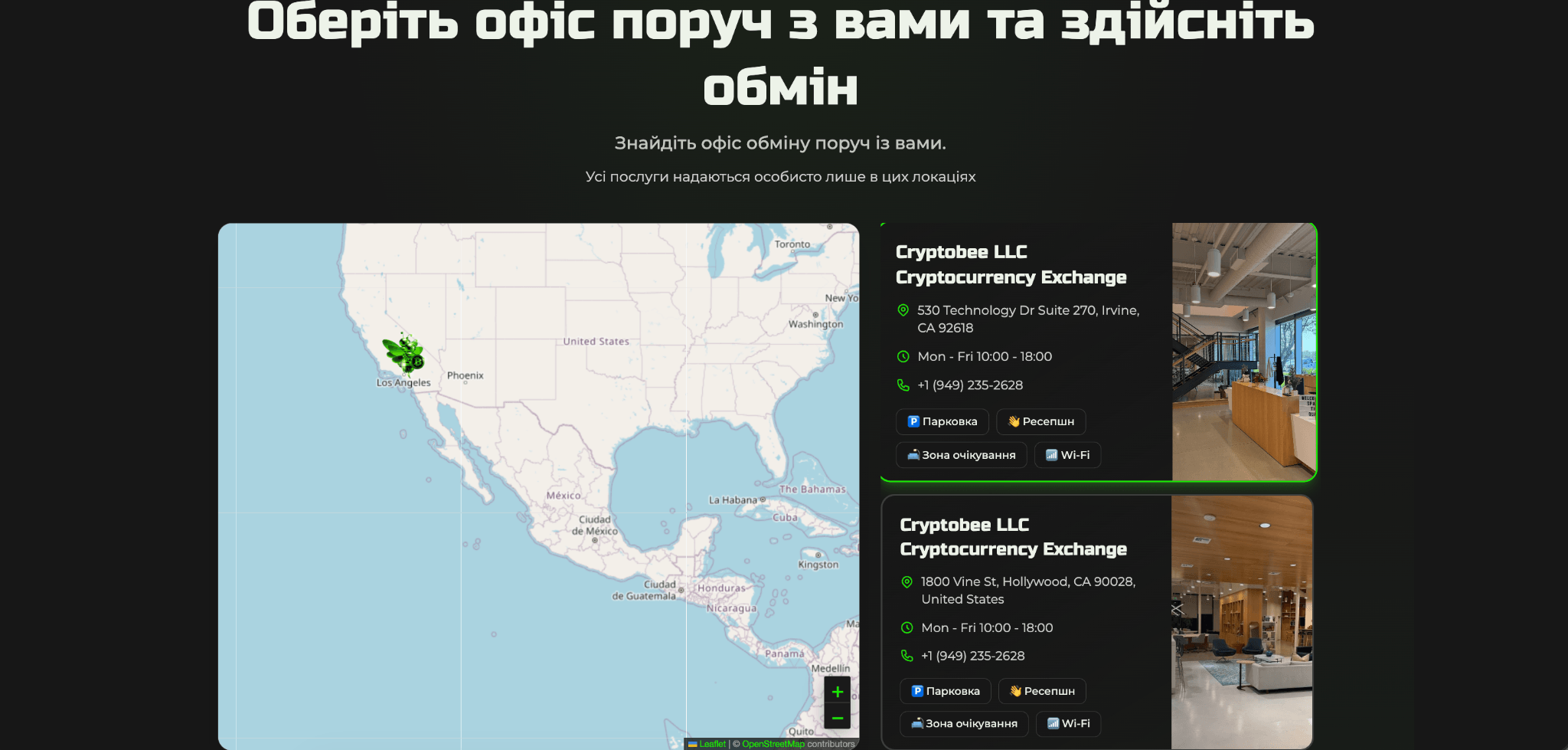
CryptoBee Exchange operates in 150 countries, but the main demand is formed where people constantly move money between several jurisdictions. A major role here is played by the diaspora in California – users connected with Ukraine, the Baltic countries, the Middle East, and other regions where international transfers remain an everyday need.
The team separately notes growing interest from North America, especially in cash payouts. There is also noticeable active demand among clients connected with Dubai, where there is a high concentration of international business and a strong need for flexible solutions outside the classic banking model.
The logic here is simple: where there is international movement of people, business, and money, there is almost always demand for services that can quickly build a working financial route for a specific situation.
Regulation, control, and new challenges
In the field where international transactions take place, compliance issues have long become part of everyday work. CryptoBee Exchange operates as a registered MSB with a FinCEN license, so meeting the requirements is a basic standard for the team rather than an additional option.
But today the main challenge comes not only from regulators. Payment systems themselves are behaving more and more strictly. Wise, Revolut, PayPal, and other services are increasingly closely tracking transaction patterns, can restrict operations without warning, and regularly review their own rules.
In such a situation, it is not the service that has simply connected as many tools as possible that wins. The winner is the one who manages to adapt, knows the specifics of each system, understands the risks for different countries and amounts, and can correctly build a route for a specific case.
What ultimately sets CryptoBee Exchange apart
The main difference here lies in the depth of the approach. One service simply processes a standard operation if it goes through without complications. Another knows how to work with more complex scenarios: take limits into account, foresee the risk of delay, choose the route, explain the logic of the process to the client, and bring the deal to final confirmation without communication failures.
CryptoBee Exchange is moving exactly in this direction. The team is betting simultaneously on broader coverage and reliability, expanding the list of payment systems, working through non-standard scenarios, and continuing to develop the geography of cash payouts.
For you as a user, this means one simple thing: CryptoBee Exchange already works not only as a classic exchanger, but also as a service that helps build and carry out a financial route through different payment systems, crypto, cash, and cashless payments. The service also publishes current rates, updates, and news on Instagram – @cryptobee.exchanger.