AXO.cash: when payment goes through quickly and the exchange does not get stuck
May 18, 2026
The weakest point of a crypto exchange is often not where most people think. You choose a direction, agree with the rate, but everything comes down to payment.
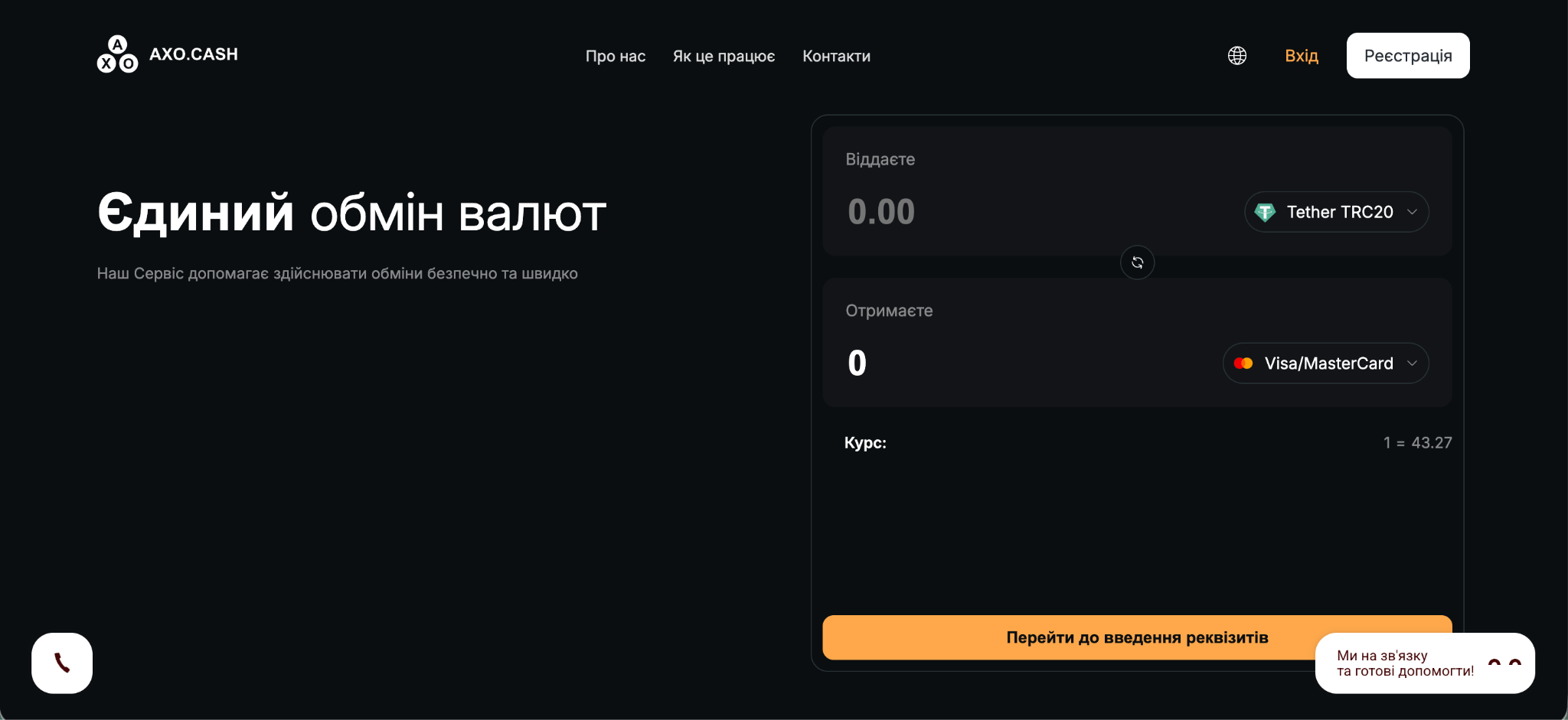
The service AXO.cash focuses on fast payments, stable acceptance of funds and a process in which the client sees the logic of every step: created an order, checked the details, paid, received funds to a card or account.
AXO.cash is a service where the operation goes smoothly from the first attempt. This was implemented through internal infrastructure: proprietary software, Telegram bots for distributing orders between operators, predictable daily limits and prepared payment routes.
A service that grew
The AXO.cash team came to this service through practical experience in the exchange business: previously, it serviced similar projects, worked with payouts and saw where users most often experienced tension.
Pavlo talks about AXO.cash. He represents the service team, is responsible for product development, operational processes and the technical part of the site. Because of this, his focus is not only on how everything looks for the client, but also on what happens inside: how an order gets to the operator, how payment is accepted, how the team keeps pace and where technology can remove unnecessary manual workload.
From the very beginning, the team wanted to create a service in which the client quickly understands the order of actions. You go to the site, choose a direction, see the terms, create an order, check the details and make the payment. There should be no room for guessing in this chain, because in an exchange any unclear detail quickly turns into an extra request to support.
Why speed starts even before the payout
When a service talks about speed, the user often thinks about the final moment: when the money has already arrived on a card or account. AXO.cash looks at this more broadly: if an order takes a long time to enter processing, payment gets stuck on verification or operators handle orders unevenly, there will be no fast payout.
AXO.cash uses proprietary software and Telegram bots that automatically distribute orders between operators in turn. This reduces the risk that some orders will stand still while others are already in progress. For the client, this system is invisible, but it is exactly what affects the pace of the exchange.
Pavlo explains that the service does not want to work in catch-up mode. If a direction is available, there must be prepared daily limits, payment routes and a team that understands the workload. Then speed does not depend on chance or the mood of a particular operator.
Payment as the main moment of the order
In any exchange, there is a moment when the client is most nervous, and usually this is the moment of payment. Before that, you can still change the amount, check the direction or close the page, but when the funds have already been sent, you want to see that the service has accepted the payment and the order is moving forward.
It is important for the team that the client sees correct details, understands the payment procedure and does not waste time on extra clarifications. If the payment stage is inconvenient, even a good rate and a quick support response will not fix the first impression.
That is why AXO.cash treats payment acceptance as part of the service, not as a technical formality. Stable payment solutions, minimal manual actions and a clear order route help complete the operation without unnecessary stops. For the client, it looks simple: paid, the order moved forward, the result does not get lost in the process.
Convenience that removes unnecessary questions
A new user does not need to read long explanations to understand whether it is comfortable to make an exchange here. A few steps are enough: whether the form is built logically, whether it is clear where to enter data, whether there is no feeling that after payment something will have to be searched for manually.
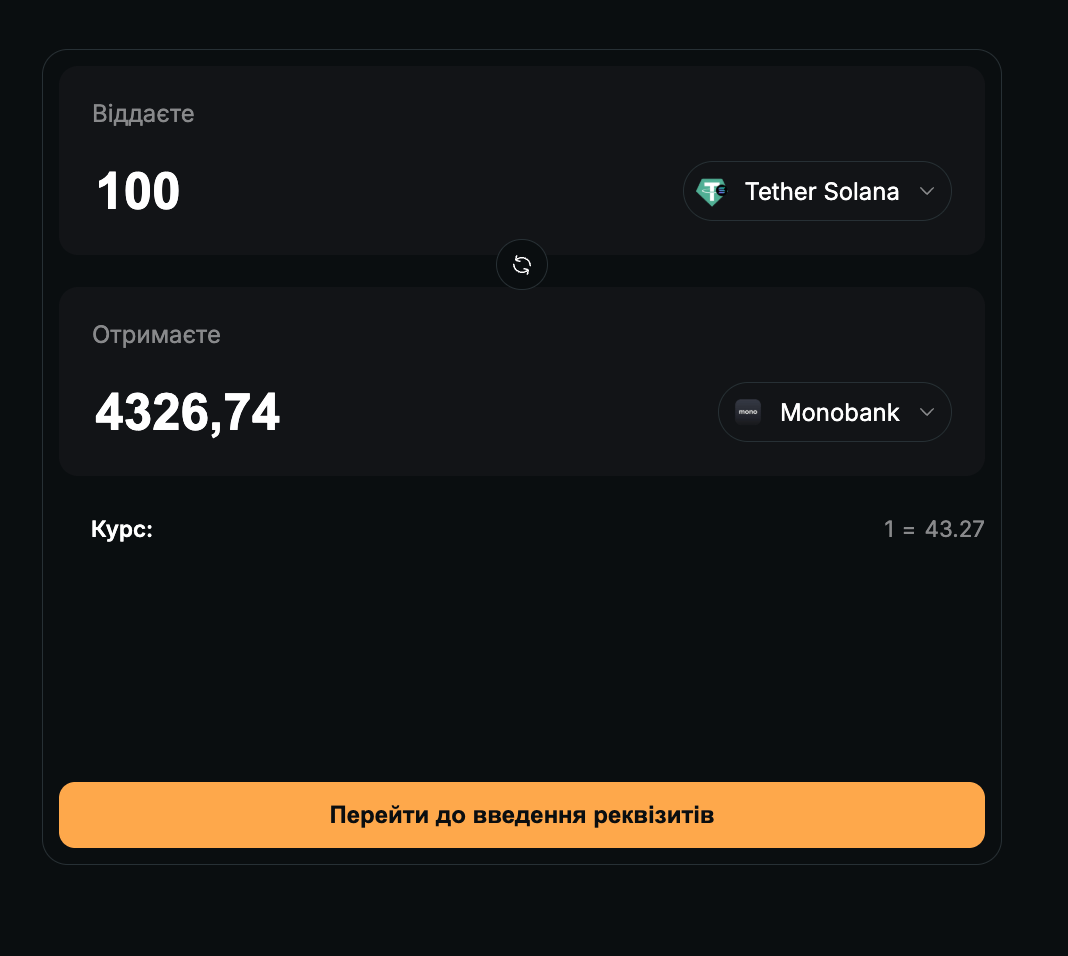
AXO.cash makes this path short and predictable. Creating an order, checking details, payment, receiving funds to a card or account. The team does not complicate the process where the user needs a simple action.
When the interface itself explains the order of steps, operators spend less time on basic questions. Instead, they can react faster to non-standard situations: clarifications on an order, an urgent payment, a user error or another moment where the live involvement of the team is needed.
When speed really decides
AXO.cash highlights two main scenarios:
- The first is when speed is critically important to the client.
- The second is when stability and a calm process without surprises are important.
The rate also remains important, but in a real operation people often choose a service they trust to complete the order.
Pavlo recalls situations when a client needed to close a payment here and now. For example, a person is already standing at the checkout and asks to complete the operation as quickly as possible. In such a moment, it is not enough for the service to simply be polite in chat. Prepared routes, an operator in work and a process that does not stop at every small detail are needed.
According to the team, such urgent requests do not happen every day, because the standard regulation is already built for fast processing. But when the situation really requires a reaction, AXO.cash tries to get involved without long pauses.
Directions backed by a process
A large number of directions can look like an advantage, but only if the service is able to properly maintain them. AXO.cash does not add a new direction just for a wider list on the site. First, the team prepares the infrastructure, checks the process and only after that opens the direction for users.
AXO.cash does not want to look big through chaotic expansion. It is more important for it that every available direction works predictably: with normal payment acceptance, a clear order route and readiness to complete the operation at the stated pace.
For the client, this means fewer compromises. You choose the needed direction and do not have to think whether the service is really ready to process it; if the option is available, it must be supported technically and operationally.
Where automation helps
Fast services always have a risk of overdoing automation. If everything is handed over to the system, attention to detail can be lost, or if everything is done manually, speed quickly drops. AXO.cash keeps this balance through the division of processes.
Where the action is standard, automation works: distribution of orders, internal notifications, prepared processing logic. Where a decision can affect the security or quality of the exchange, team control remains. This applies to non-standard situations, checks, client requests and moments where operator responsibility is needed.
This approach helps the service not turn speed into haste. The client gets a fast process, but is not left alone with the system if something needs clarification.
What AXO.cash is in the client’s memory
Pavlo says that the team wants AXO.cash to be remembered as a place where everything goes quickly, clearly and without unnecessary questions. This phrase clearly shows the position of the service: not to overload the client with the process, but to make the exchange work smoothly.
If you look at AXO.cash, its strength is not only speed. More important is how the service combines several things into one experience: payment acceptance without unnecessary delays, a clear order path, prepared directions, technical automation and a team that controls the process.
This is often what becomes decisive for the client. Because in an exchange, you do not want to study the internal workings of the service, but simply complete the operation and get the result within a clear timeframe. AXO.cash builds its work around this expectation.